Posts

Showing posts with the label accessibility

Ready Willing but Still Waiting

Image
  We keep saying we want more disabled people in work. So why are we making the support they rely on harder to use? The government is clear about its ambition: more disabled people in employment, fewer people stuck on benefits, and a labour market that makes better use of talent that is currently overlooked. It’s an aim many of us would support without hesitation. But ambition only matters if the systems underneath it actually deliver — particularly for employers who are expected to turn policy into practice. Access to Work sits at the heart of this. It is one of the few mechanisms the government directly controls that enables disabled people to take up work, stay in work and progress in their careers. For employers, it underwrites reasonable adjustments, reduces risk and makes inclusion practical rather than aspirational. Yet recent data and lived experience point in an uncomfortable direction. Fewer people are having Access to Work support approved than a year ago, waiting times ...

When “Convenience” Leaves People Behind

Image
  Ever tried using a parcel return point from a wheelchair? I did recently — or rather, I  tried  to. What followed was a lesson in how clever ideas can become barriers when inclusion isn’t part of the plan. At my local Morrisons, there’s a shiny new self-service parcel drop-off point tucked away at the back of the garage forecourt. There’s no dedicated parking for it, so the only option is to stop in the forecourt itself. The service road leading to the supermarket is on a bend, and pulling up there would be far too risky. From the forecourt, there are no dropped kerbs, so you first have to brave a busy service road. Then comes a raised kerb and a stretch of loose grey shale before you even reach the machine. And even if you get that far, the scanner and parcel boxes are mounted so high they’re out of reach. And then there’s the unspoken assumption: that wheelchair users always have someone with them. That we never go anywhere alone. In reality, many of us are perfectly ...

Accessible Transport Isn’t Just About Infrastructure – It’s About Attitude

Image
Every so often, another report lands reminding us that disabled people still travel far less than everyone else. The latest research from the  National Centre for Accessible Transport (NCAT)  and the  Research Institute for Disabled Consumers (RiDC)  shows that disabled people make  38% fewer journeys  than non-disabled people — and that figure hasn’t changed in over ten years. You’d think that after decades of work on accessibility, that gap would be closing. But NCAT’s new report,   Invisible Barriers: How Public Attitudes Affect Inclusive Travel , makes it clear that the problem isn’t just about step-free stations or broken lifts. It’s about   people’s attitudes . The invisible barrier we don’t talk about NCAT found that   59% of disabled travellers regularly encounter negative attitudes   — from staff, fellow passengers, or even bystanders. The stories are painful, and sadly familiar. People are disbelieved when they ask for help, m...

Motability: A Lifeline, Not a Luxury

Image
On 10 September,  The Times  ran a piece questioning the Motability scheme. It warned that “one in five new cars sold in Britain are now bought by Motability … given £2.8 billion in taxpayer cash each year.”  Read the article here It’s a dramatic claim. The picture painted is one of disabled people cruising around in luxury cars at public expense. It makes good copy. But it doesn’t match the reality. Here’s the first thing to understand. Motability doesn’t decide who qualifies. That’s the job of the Department for Work and Pensions. If the DWP awards you the mobility component of Personal Independence Payment (PIP), you can choose how to use it. One option is to put it towards a Motability vehicle. So when critics say people with “tennis elbow” or “social phobia” are getting cars, that’s not about Motability. That’s about how DWP sets the rules. Blaming the scheme for that is like blaming a shopkeeper because you don’t like who was allowed into the store. Then there’s the...

An Accessible Shopping Expedition: Navigating the Retail Jungle on Wheels

Image
Today's outing was more of an escapade than your run-of-the-mill shopping trip. Spurred by my wife's vision of a delightful day combining retail therapy with culinary indulgence, we set off for the mall. This isn't just any day out for someone who navigates the world from a wheelchair. Our adventure began promisingly with a parking spot snagged without a hitch. However, the journey from car to store quickly morphed into an unexpected game of dodgeball, featuring parked cars as the main opponents—apparently, they hadn't received the memo about not blocking dropped curbs. This whole experience whisked me back to the '90s, a time when I collaborated with M&S on pioneering retail accessibility. Oh, those were the glory days of innovation, with carpets and acrylic tiles laying down the red carpet (literally) for our visually impaired friends, guiding them through the store with the finesse of a tactile GPS. Fast forward to the present, and it seems we've taken a ...

2024: A Turning Point for the UK's Disabled Community in Climate Advocacy?

Image
Happy New Year! As we welcome this new year, I have been reflecting on the impact of climate change on the lives of disabled people. I have been thinking about how they can take control of their own futures and prepare for the challenges ahead. This has led me to imagine a scenario where I am invited to speak at COP24 in front of leaders and influencers from all over the world. If given the opportunity, I would share a message of hope and empowerment for disabled people. It would go something like this: Ladies and gentlemen, esteemed delegates of COP24, As we welcome 2024, I sit before you as one voice from the twelve million disabled individuals in the UK, a demographic often overlooked yet pivotal in the climate change discussion. Our presence at this juncture is not just symbolic; it is a testament to our potential to shape the environmental debate. Imagine with me, if you will, a future where our cities are more than concrete jungles. A future where green spaces and accessibility c...

Inclusive Bridges: A Long Journey, An Unfinished Road

Image
On a balmy evening in July, I went to the National Theatre to watch a riveting production of "Dear England". As a 70-plus-year-old wheelchair user, the play served to remind me of the journey we have undertaken, as a society, towards inclusion and the many more miles we must travel. "Dear England" struck a chord, suggesting parallels with the trials and tribulations of the England football players and the hurdles I and countless others have faced over so many decades.  Half a century earlier, I could not have seen this play. Theatres were not built with wheelchair users in mind, and the lack of physical access was a daunting barrier.  The exclusion was not just about the physicality of accessing buildings; it was an emblem of the broader societal attitude. Disabled individuals, like myself, were often unable to fully participate in life's grand drama. On the fringes, we were spectators unable to access education, employment, and leisure activities, like anyone e...

The Unseen Consequences: Closure of Rail Ticket Offices and the Cascade of Challenges

Image
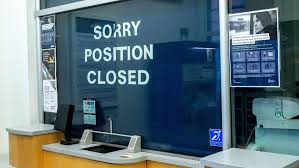
Ticket Office Closed The recent announcement to close rail ticket offices harbours the potential to fundamentally reshape the train travel experience. At first glance, it appears to be a step towards digital efficiency, but delving deeper reveals its grave implications, particularly for disabled travellers and the general public. For me and other disabled travellers, ticket offices have always been more than just a ticket point. They are a sanctuary for us seeking assistance with navigation, boarding, and ticket purchases. With the closure of these offices, seeking help becomes more daunting, especially in emergencies. And the lack of human presence could make stations feel less secure, leaving passengers, particularly disabled and older people, feeling vulnerable. The proposed closures also bring into focus the technological challenges that lie ahead. While seemingly efficient, advanced ticket vending machines and digital platforms may be user-friendly for some, they spell trouble for...